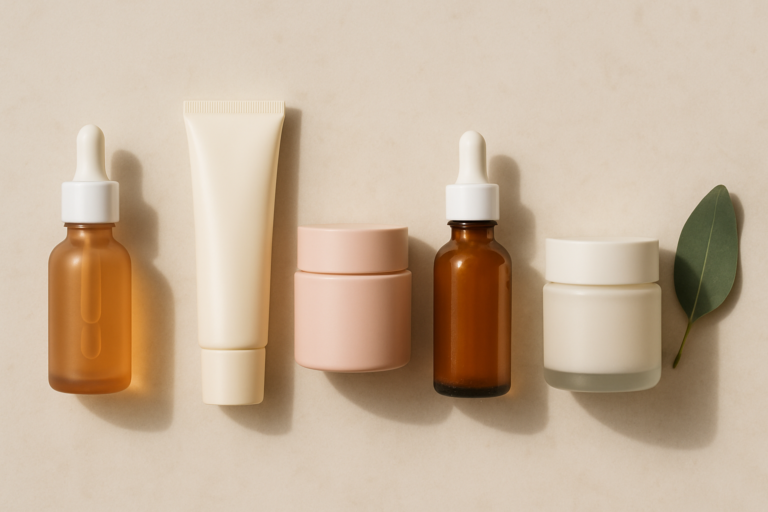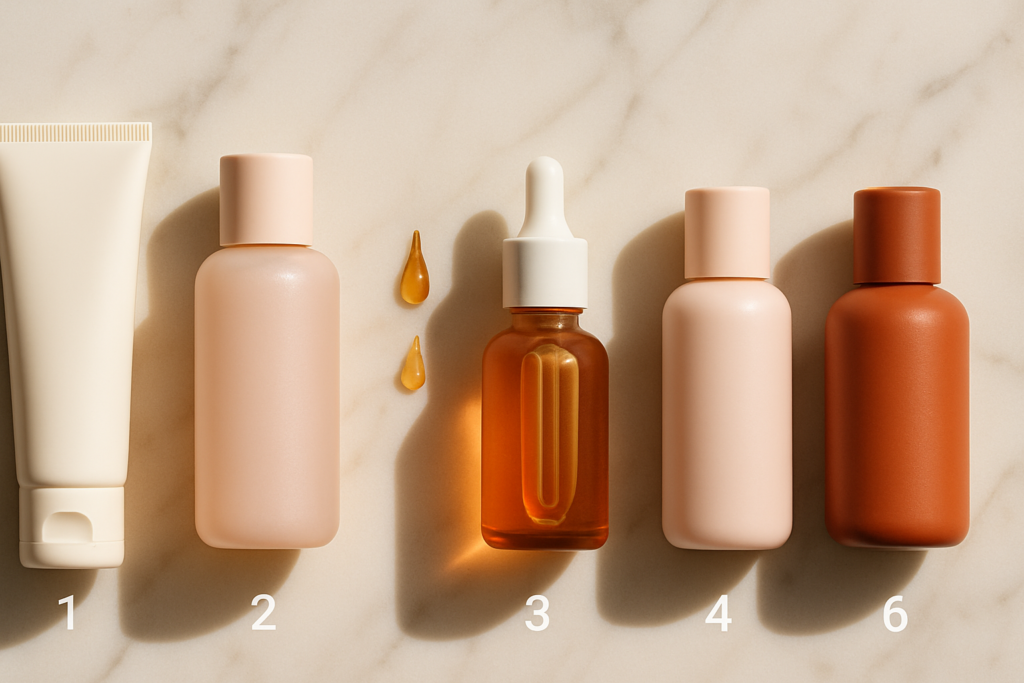
The order you apply skincare in matters more than most people realize. The same five products applied in two different orders can give dramatically different results — better penetration or worse, longer-lasting moisture or shorter, more irritation or less.
Most skincare advice gets this wrong by oversimplifying (“thinnest to thickest”) or by ignoring the chemistry of how active ingredients actually interact. Here’s the order that working dermatologists, estheticians, and makeup artists actually use, and why each step matters.
The fundamental rule (and why “thinnest to thickest” is incomplete)
You’ve probably heard “apply thinnest to thickest.” It’s not wrong, but it’s an oversimplification. The real rule is:
Apply in order of penetration, not viscosity.
The actives that need to reach deeper layers of skin go first. The products that seal everything in go last. Texture is roughly correlated with penetration, which is why “thinnest to thickest” works most of the time. But not always.
Some thin products are sealing (face oils). Some thick products are penetrating (heavy serums with retinol). The skill is knowing which is which.
The morning routine, in order
This is the actual professional order for daytime skincare:
Step 1: Cleanser (10 seconds)
Use a gentle cleanser appropriate to your skin type. Mature or dry skin: cream or oil cleanser. Combination or oily: gel cleanser. Sensitive: micellar water.
Don’t over-cleanse in the morning. You’re just removing the night’s products and any overnight oil. A 10-second cleanse is enough.
Step 2: Toner or hydrating essence (optional, 20 seconds)
Modern toners aren’t the astringent stripping products from the 90s. They’re hydrating preparations that prime skin for what follows. Most are pH-balancing and contain humectants.
Apply with hands, not cotton pads. Cotton wastes product.
This step is optional. If you skip it, skin still works.
Step 3: Vitamin C serum (45 seconds)
On dry skin (or barely-damp from toner). Vitamin C needs to penetrate, so it goes before heavier products.
Wait 60-90 seconds after applying before the next step. This is the step most people rush. Vitamin C needs time to acidify on skin to be most effective.
Step 4: Hyaluronic acid serum (30 seconds)
Apply onto damp skin. If your skin is too dry at this point, mist it lightly with water first, then apply HA immediately.
Why dampness matters: hyaluronic acid pulls moisture from wherever it can get it. On damp skin, it pulls from the air (good). On bone-dry skin, it pulls from deeper layers of your own skin (bad — it actually dehydrates you).
Step 5: Moisturiser (30 seconds)
Applied to slightly damp skin from the previous steps. Moisturiser seals in everything below it.
For mature skin, choose a richer formulation in the morning. For oily skin, a lighter gel-cream works.
Step 6: Sunscreen (45 seconds)
The final step, and the non-negotiable one. SPF 30+, broad-spectrum, applied generously. A pea-sized amount for the face is roughly enough.
Wait 90 seconds after sunscreen before applying makeup. Sunscreen needs to set on skin to be effective.
Total morning routine: 4-6 minutes depending on whether you include optional steps.
Learn this from Paula Callan
30 years training celebrity makeup artists. 7 hours of video tutorials, lifetime access, 60-day money-back guarantee. €149.
The evening routine, in order
Evening skincare is where the real work happens. Cells repair at night. Active ingredients work without UV interference.
Step 1: Oil cleanser (60 seconds)
Removes sunscreen, makeup, and oil-based debris. Use even on bare skin days — sunscreen is enough reason for an oil cleanse.
Step 2: Water-based cleanser (30 seconds)
The “second cleanse.” Removes sweat, water-soluble debris, and the residue from the first cleanse. Essential because oil cleanser alone leaves a film.
This is the “double cleansing” Korean skincare popularised. It’s not a fad — it’s how skin actually gets clean.
Step 3: Hydrating essence or toner (optional, 20 seconds)
Same as morning, optional.
Step 4: Active serum (varies)
This is where night routines diverge:
Retinol night: Apply retinol to completely DRY skin. Wait 20 minutes after cleansing (or use the “retinol sandwich” — moisturiser, then retinol, then more moisturiser).
Exfoliating acid night (alternate nights from retinol): Apply BHA or AHA to damp skin.
Recovery night (between active nights): Skip this step entirely. Go straight to moisturiser. Skin needs nights without actives.
Step 5: Hyaluronic acid (30 seconds)
On damp skin, same as morning. Especially important on retinol nights — retinol is drying.
Step 6: Heavier moisturiser or night cream (45 seconds)
Evening moisturiser can be richer than morning. You’re not putting makeup on top, so texture matters less.
Step 7: Face oil (optional, 30 seconds)
For very dry skin, a face oil over moisturiser seals everything in. Skip if your skin is normal or oily.
Total evening routine: 5-8 minutes depending on actives.
The rules nobody tells you
These are the chemistry-based rules that consumer tutorials skip:
Rule 1: Active acids and retinol cancel each other out
Never use vitamin C, retinol, AHAs, BHAs, and benzoyl peroxide all in the same routine. They neutralise each other’s effectiveness, AND they irritate skin together.
The fix: Split them. Vitamin C in the morning. Retinol or exfoliating acid at night. If you use both retinol and exfoliating acid, alternate nights — never combine.
Rule 2: Hyaluronic acid needs water
Apply on damp skin only. On dry skin, it actively dehydrates you. This is the most common skincare mistake.
Rule 3: Retinol needs dry skin
Apply on completely dry skin only. Damp skin amplifies retinol’s potency, causing irritation. Wait 20 minutes after cleansing or apply moisturiser first (“retinol sandwich”).
Rule 4: Sunscreen needs settling time
Wait 90 seconds before applying makeup. Otherwise the makeup disrupts the sunscreen layer.
Rule 5: Niacinamide is the team player
Niacinamide is one of the few actives that works with everything. It pairs safely with retinol, vitamin C, AHAs — all of them. Use it freely.
Rule 6: Wait between layers (mostly)
The “wait 60 seconds between products” advice is roughly right. Skin can only absorb so fast. Layering everything in 30 seconds means most of it stays on the surface.
Exception: Apply hyaluronic acid IMMEDIATELY after toner or essence — it needs the moisture to work.
Get the Becoming a Makeup Artist guide
The honest career roadmap — training options, realistic timelines, first-kit budgets, and how to know if this path is right for you.
When to skip steps
Not every routine needs to be 7 steps. Most people do too much. Common over-routines and how to simplify:
If you have 4 minutes total: Cleanser → moisturiser → SPF. That’s it. Better to do three steps well than seven steps badly.
If you have 8 minutes morning + 8 minutes evening: The full routines above. This is what most adult skin needs.
If you’re applying 10+ products: You’re probably overdoing it. The ROI on each additional product diminishes fast. Five well-chosen products usually outperform ten randomly chosen ones.
Why this matters for makeup application
The skincare routine isn’t separate from makeup. Skin prep is foundation prep. Working bridal makeup artists routinely spend 8-10 minutes on skincare BEFORE touching any makeup product. This is because:
- Foundation applied on improperly layered skincare pills, slides, and creases
- Concealer can’t set on under-prepped skin
- Powder applies unevenly on skin that isn’t ready
If you’ve ever wondered why your makeup “settles” or “creeps” by midday, the answer is usually skin prep. Get the skincare order right, and makeup behaves entirely differently.
This is one of the most useful things working artists learn early — that the makeup application starts before the foundation does. The skincare layering technique above is essentially the prep used on bridal and event clients, just personalised for your own face.
The bottom line
Skincare order isn’t a guideline, it’s chemistry. Get the layering wrong and even good products underperform. Get it right and the same five products give visible results in 8-12 weeks.
The most important rules to remember:
1. Vitamin C in the morning, retinol at night (never together)
2. Hyaluronic acid on damp skin (always)
3. Retinol on dry skin (always)
4. SPF every morning (non-negotiable)
5. Niacinamide pairs with anything (safely)
For makeup artists or aspiring ones: the skin prep IS the makeup prep. Master the layering above and your foundation work will look dramatically better. This is one of the foundational principles the Paula Callan Masterclass treats properly — the connection between skincare and makeup that most consumer tutorials ignore.