Beauty marketing wants you to buy 30 brushes. You need 7. Possibly 5, if you’re willing to be ruthless about it.
I’ve watched aspiring makeup artists invest €200-€400 in elaborate brush sets, only to use the same 4-5 brushes for every face. I’ve watched consumers buy 24-piece “starter kits” on Amazon and pull out the same three brushes from the bag every morning. The pattern is universal: most brushes in most kits are dead weight.
Here’s what you actually need, whether you’re doing your own makeup or building a working artist’s kit.
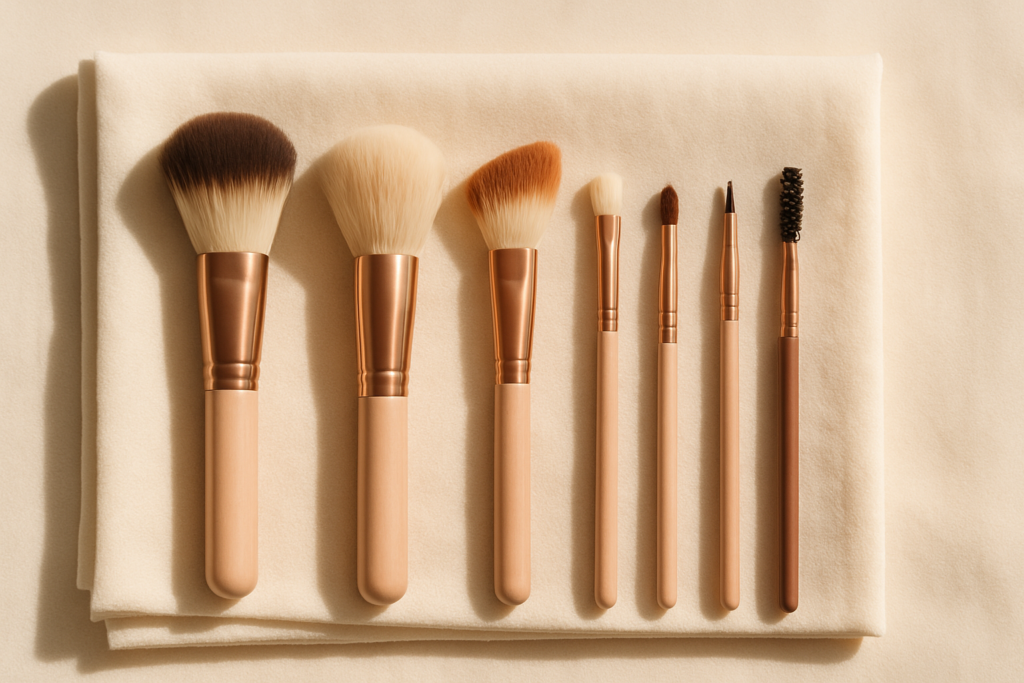
The 7-brush kit (in order of how much you’ll use them)
These seven brushes cover roughly 95% of what any face needs. Listed in order of frequency of use.
1. A medium fluffy face brush (for blush and powder)
This is the brush you’ll reach for most. It needs to be fluffy enough to diffuse colour rather than concentrate it, and soft enough that it doesn’t drag on the skin. About the size of your palm.
If you only own one brush, this is it. Working artists routinely use a single fluffy brush for blush, bronzer, powder, and finishing — the result is more diffused and natural than using a separate dense brush for each task.
What to buy: Real Techniques Multi-Task Brush (€10), MAC 168 (€32), or Wayne Goss 18 (€40). Skip anything that comes in a synthetic 24-piece set.
2. A small fluffy eyeshadow brush (for blending)
The single most important eye brush you own. It’s NOT for applying shadow — it’s for blending the edges after you’ve applied. The mistake most consumers make is using a stiff packed brush for the entire eye look. The mistake working artists rarely make is trying to skip this brush.
What to buy: MAC 217 (the industry standard, €27), Morphe E25 (€8), or Real Techniques Base Shadow Brush (€8).
3. A flat synthetic foundation brush OR a damp beauty sponge (your choice)
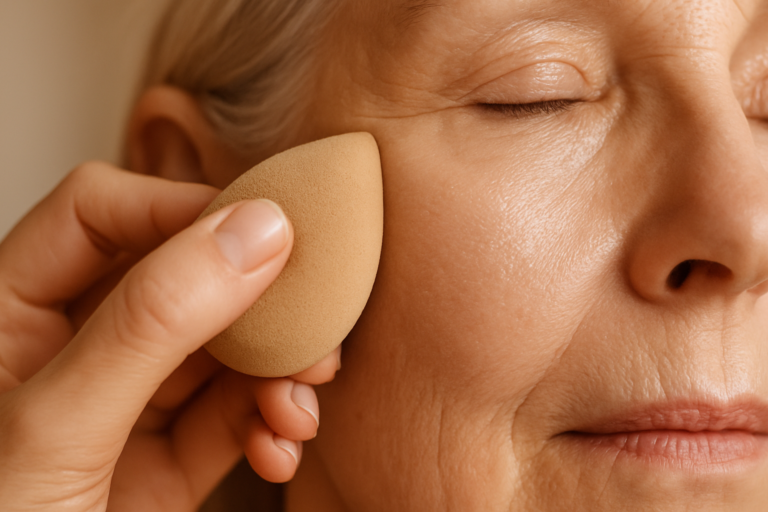
Foundation application is either-or. You either use a flat synthetic brush (faster, more coverage) or a damp sponge (more natural finish, slightly slower).
Working bridal artists tend to prefer sponges because they give more even, natural-skin-like finish that photographs well. Editorial artists often prefer flat brushes for control and speed.
For your own makeup, the damp sponge is usually the better choice on mature skin.
What to buy: Beautyblender Original (€20) for sponges, or Real Techniques Expert Face Brush (€10) for the flat brush option.
4. A precision blending brush (small, dense, pointed)
For under-eye concealer and any small detailed work. Different from the fluffy blending brush — this one is dense and pointed, designed to deposit product precisely and blend it in tight spaces.
What to buy: Real Techniques Precision Brush (€8) or MAC 219 (€28).
Learn this from Paula Callan
30 years training celebrity makeup artists. 7 hours of video tutorials, lifetime access, 60-day money-back guarantee. €149.
5. An angled brush (for brows and liner)
One brush, two jobs. Flat angle on one side, used for filling brows with hair-like strokes OR for applying liner along the lash line. Most consumers buy two separate brushes for these tasks. Working artists usually use the same one.
What to buy: MAC 263S (€24) or Anastasia 7B (€18).
6. A small fluffy crease brush (tapered)
For applying transition shadow into the crease and along the outer corner. Slightly more shaped than the blending brush (#2), with a more pointed tip for control.
You can technically combine this with brush #2 if you’re being ruthless about kit size. But the work is faster with both.
What to buy: MAC 224 (€31), Morphe M501 (€7), or Real Techniques Eye Shading Brush (€8).
7. A small concealer brush OR your fingers
For spot concealing — blemishes, redness, anything precise. The brush approach is more hygienic for client work; the finger approach is faster for your own face and gives better warmth for blending into skin.
If you’re building a working artist’s kit, use the brush. For personal use, your ring finger works equally well.
What to buy (if brush): Real Techniques Detailer Brush (€6) or MAC 195 (€22).
What you DON’T need
Every consumer-facing brush set sells you brushes you’ll never use. Here are the ones to skip:
Fan brushes. Marketed for highlighter. A small fluffy brush does this better and you already have one.
Stippling brushes. Designed for foundation, made obsolete by sponges. Most working artists I know don’t use these.
Kabuki brushes. Big, dense, designed for powder application. Will deposit far too much product on mature skin. Use the fluffy brush instead.
Contour brushes (the angled, dense kind). Will create stripes. The cool taupe sculpting technique professional artists use is done with a fluffy diffused brush, not a dense angled one.
Lip brushes. You can use your finger or the lipstick directly. Save the €15.
Anything in a 24-piece “complete kit.” These are loss leaders. The brushes are too soft, the bristles fall out, the handles break. You will buy each one again at higher quality within 18 months. Skip them entirely.
The honest truth about brush quality
There are three quality tiers, and the differences matter more than beginners realise.
Tier 1 (€5-€15 per brush): Real Techniques, Morphe, EcoTools, Sigma basics. Perfectly serviceable for most home use. Will last 2-3 years with proper care. The synthetic bristles work fine for cream products.
Tier 2 (€20-€40 per brush): MAC, Wayne Goss basics, Charlotte Tilbury, Hourglass. The bristles are softer, more dense, more precisely cut. Each brush does its specific job better. Will last 5-10 years.
Tier 3 (€50-€150+ per brush): Wayne Goss premium, Hakuhodo, Suqqu, Chikuhodo. Hand-made, usually Japanese, mostly natural bristle (which has implications for vegan-conscious consumers). The difference is genuinely noticeable but the marginal return diminishes fast.
For most consumers: stay in Tier 1 for everything except the brushes you use daily (face brush, blending brush). Upgrade those to Tier 2 once you know what works for your face.
For aspiring working artists: invest in Tier 2 for everything in your standard kit. The brushes need to handle daily use, frequent washing, and look professional when you pull them out in front of a client. Tier 1 brushes wear out fast under professional conditions.
Get the Becoming a Makeup Artist guide
The honest career roadmap — training options, realistic timelines, first-kit budgets, and how to know if this path is right for you.
How to actually buy this kit
Don’t buy all 7 at once. Buy them as you genuinely need them:
Week 1: Buy the medium fluffy face brush (#1) and the blending brush (#2). These two alone cover 60% of what you do.
Month 2: Add the foundation brush or sponge (#3). Decide based on whether you’ve been struggling more with foundation looking patchy (use sponge) or thin (use brush).
Month 3-4: Add the precision brush (#4) and the angled brow/liner brush (#5).
As needed: Add the crease brush (#6) if your eye looks aren’t blending well, and a concealer brush (#7) only if you’re building a professional kit.
Total cost done this way: €60-€80 for a complete Tier 1 kit, or €150-€200 for Tier 2.
The marketing wants you to spend €200 on Day 1. The reality is you’ll spend €80, use each brush you bought, and not waste money on dead-weight brushes.
For aspiring artists specifically
If you’re building a kit to do paid client work, the 7-brush kit above is your foundation, but you’ll need a second copy of brushes #1, #2, #3, and #5. Reason: hygiene. You can’t use the same brush on multiple clients without washing it between, and washing brushes takes 24 hours to dry properly.
A working artist’s full kit ends up being 12-15 brushes, but it’s the same 7 categories with duplicates of the most-used four. Add a brush belt or roll for €25 to keep them organised at events.
You’ll also want a brush cleaning kit: brush soap (Beautyblender Solid Soap is good, €15), a silicone cleaning pad (€8), and a drying rack (€15). Total brush care setup: €40 one-time.
The bottom line
Seven brushes is enough for almost everyone. Five is enough for many. The remaining 17-23 brushes that come in “complete kits” are products optimised for shelf appeal, not for use.
If you’re a consumer who’s been frustrated with your makeup not looking right, the brushes are usually 30-40% of the problem. The right brushes — used correctly — change the result more than the products do.
If you’re an aspiring working artist, get the right 7 brushes in Tier 2 quality, double up on the ones you use most, and skip everything else until you have a specific reason to add it.
The brush conversation is exactly the kind of foundational thing Paula Callan covers properly in her masterclass — which brush to use when, why specific bristle shapes deposit product differently, when to break the rules. Most online tutorials skip this entirely. Most beauty schools cover it badly. Paula’s is the cleanest treatment I’ve found.